
|
Getting your Trinity Audio player ready...
|
Digital marketing used to be mainly focussed on reach – that is to say, more impressions, more clicks, more noise. However, this way of doing things seems to be tiring not only for brands but also for consumers. Consumers are fed up with being bombarded with sales pitches. What they want is to be understood.
This is the main reason why intent-based marketing becomes more and more popular as we approach 2026. The main idea is to move the emphasis from just dumping messages on the clients to actually observing buyer behavior and interacting at the right time.
What Intent-Based Marketing Looks Like in Real Life
Intent-based marketing is, by and large, a matter of proper timing rather than relying heavily on the different marketing tools.
Basically, it’s keeping track of the following things about a person:
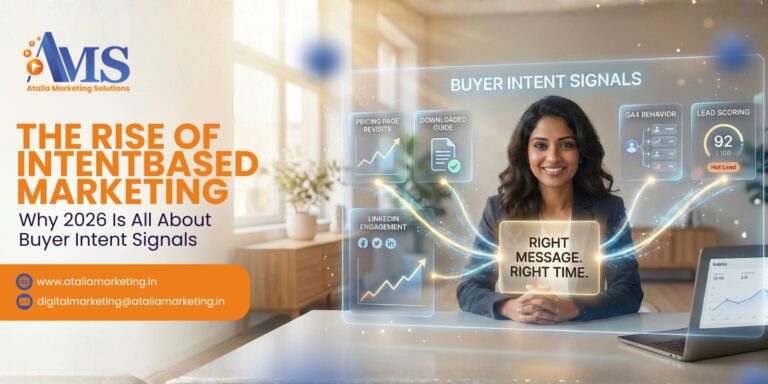
- That a person has checked out your pricing page two times this week,
- That a person has downloaded a comparison guide,
- That a person has read the content that is related to research rather than just showing curiosity.
Rather than sending out another indifferent advertisement to the entire mailing list, your reaction is to send something that is helpful to the person — a demonstration invitation, a case study, an unequivocal answer to their question.
This is marketing that people are less likely to perceive as advertising and more as a conversation.
Why Brands Are Relying on Their Own Data Again
As privacy rules tighten and third-party data fades, brands are going back to basics: their own data.
First-Party Data
This comes directly from how users interact with your brand:
- Website navigation
- Email replies and clicks
- Product page behavior
It tells you what people are doing, not what they might do.
Zero-Party Data
This is what customers tell you willingly:
- Preferences shared in forms
- Survey answers
- Polls and feedback
This data is powerful because it’s honest. When someone tells you what they want, listening becomes your biggest advantage.
Where Intent Signals Actually Come From
LinkedIn Intent Data (Especially for B2B)
For B2B brands, LinkedIn often shows buying intent before a sales call ever happens. When the same company’s decision-makers start engaging with solution-related content, it’s rarely random.
Used correctly, this data helps teams focus energy where interest already exists.
Google Analytics 4 (GA4)
GA4 isn’t just analytics — it’s behavior tracking.
Repeated visits, time spent on key pages, and drop-offs all tell a story. When brands pay attention to these patterns, they stop guessing and start responding.
Smarter Lead Scoring (Not Over-Automation)
Good intent-based marketing doesn’t blindly trust automation. It combines data patterns with human judgment to identify which leads are actually worth attention.
Why Intent-Based Ads Feel Different (and Perform Better)
Most ads fail because they arrive at the wrong time.
Intent-based ads work because they match where the buyer already is mentally.
Instead of interrupting, they assist. Instead of pushing, they guide.
That’s why brands see:
- Better engagement
- Fewer wasted clicks
- More meaningful conversations
People don’t hate ads. They hate being misunderstood.
Real-World Scenarios, Not Perfect Case Studies
A B2B brand observed that potential customers were frequently looking at the prices but were not scheduling demos. To clarify, they didn’t decide to put more money into ads but rather changed their communication – answering the most frequently asked questions by the prospects. What followed? Not only did they get more leads, but the leads were of better quality.
An e-commerce brand figured out that customers kept coming back to the same product but were not making a purchase. They got more conversions by changing the time and the messages instead of giving discounts. There were no tricks involved. They simply improved their listening skills.
Why This Shift Is Happening Now
Intent-based marketing is growing because:
- Buyers are tired of irrelevant messaging
- Marketing budgets are under pressure
- Personalization is expected, not impressive
By 2026, brands that ignore intent signals will struggle to stay relevant.
How Atalia Marketing Solutions Approaches Intent-Based Marketing
At Atalia Marketing Solutions, we don’t believe in chasing every click.
We focus on:
- Understanding real buyer behavior
- Identifying meaningful intent signals
- Building campaigns around timing, not noise
Whether it’s B2B lead generation or e-commerce growth, our strategies are built to connect when the buyer is ready — not before, not after.
Final Thought
Intent-based marketing isn’t about being clever. It’s about being attentive.
Brands that listen carefully will spend less, convert better, and build stronger trust.
And in a crowded digital world, that’s what truly stands out.